02 MEMORY / PLACE / SMALL DISCOVERIES
Pixel Peranakan
A home full of memories.
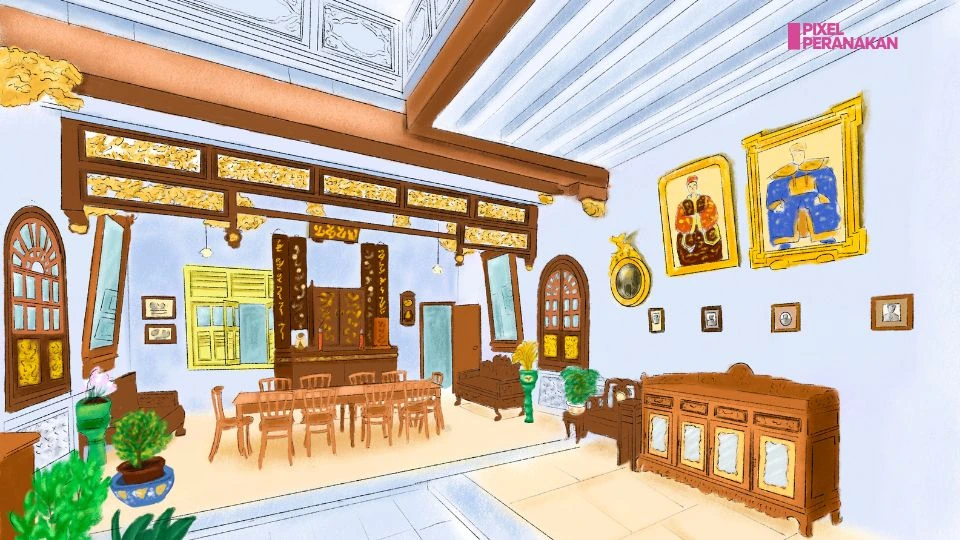
A story game about restoring memories in a Peranakan home, made with Julia Tay.
Game development & UI by Timothi Ellim · Artwork & visual direction by Julia Tay
 See it in context
INSIDE THE MAKING / NOVEMBER 2024
Before the house could respond.
Three early storyboard pages show how memory became something to do. Choose a moment to follow its interaction.
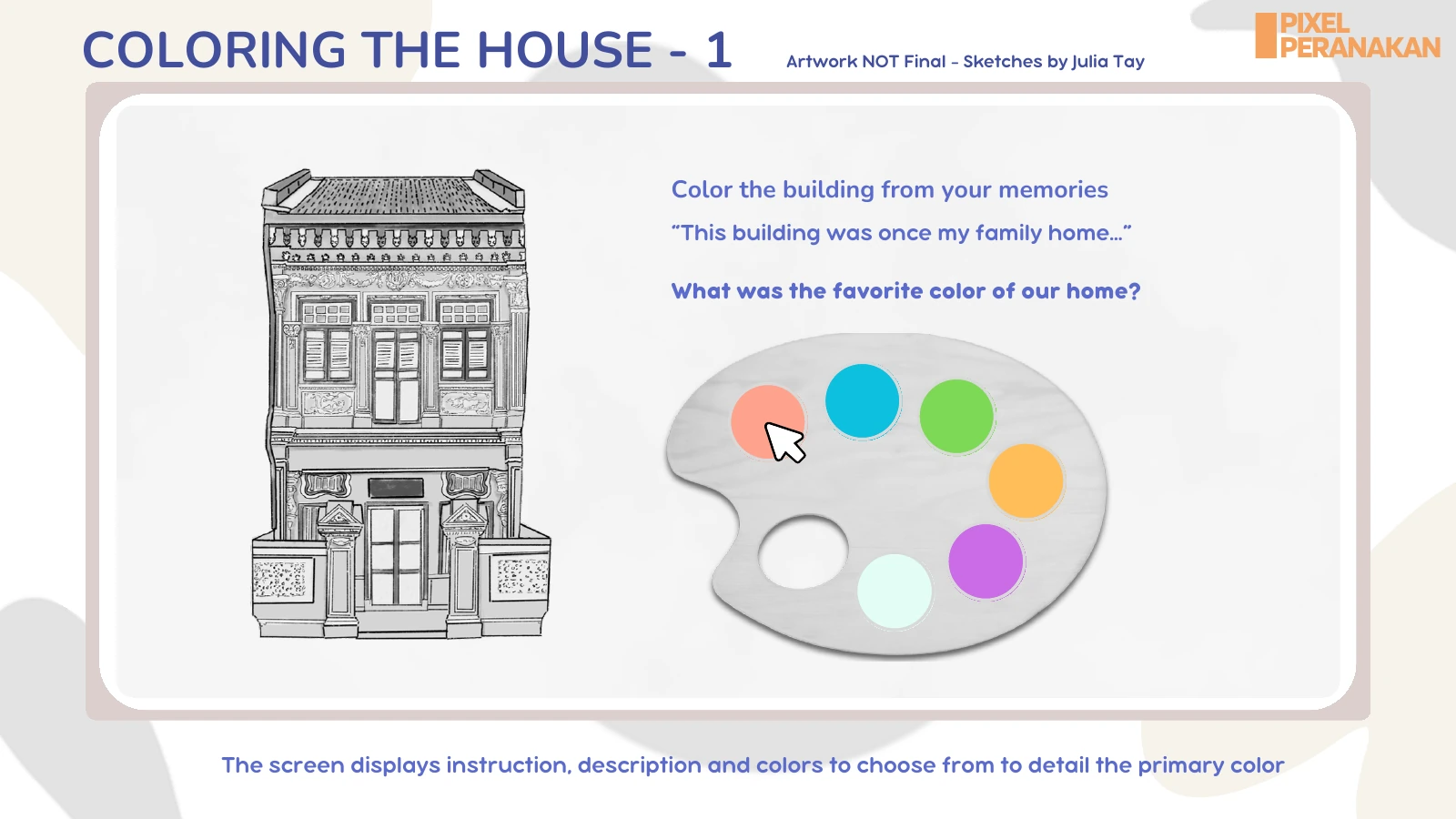
Early planning, November 2024 · Sketches and visual direction by Julia Tay. These include placeholders and are not final gameplay.
Begin with a memory.
The colour palette gives the player a small choice about the family home. In the early storyboard, restoring the house begins by remembering what it looked like.
Why a house?More to discover: choose a shophouse
A tap, a wiggle, a little sound. Follow the decisions that help the house feel responsive.
Published shophouse artwork by Julia Tay · website interaction
A little house. A lot to discover.
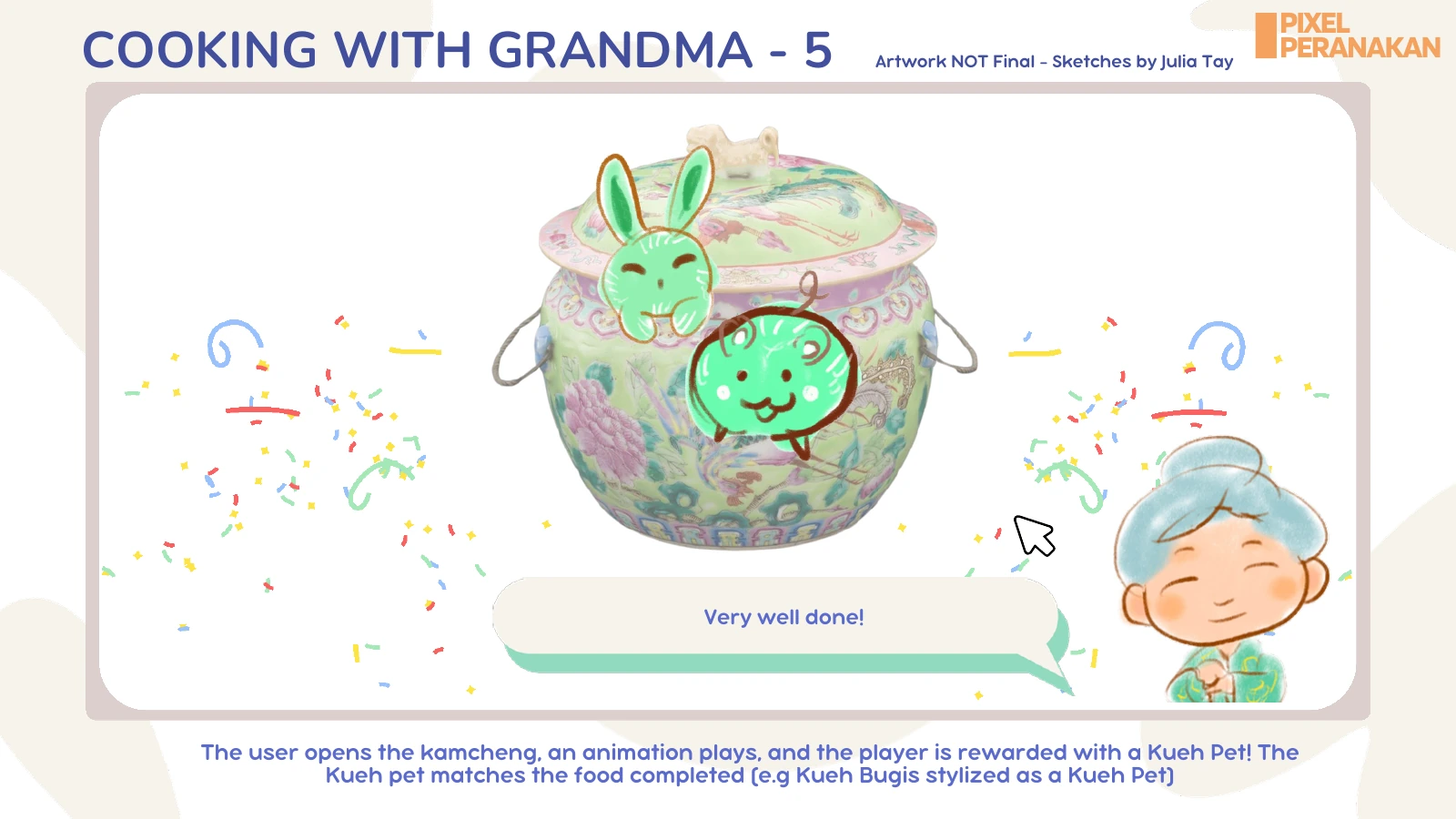
Pixel Peranakan is a playful way into Peranakan culture, made with illustrator Julia Tay. Restore a family shophouse, explore its rooms, try on kebaya outfits and cook kueh with Grandma. There’s a magical Kueh Pet to meet along the way, too.
Step inside the house
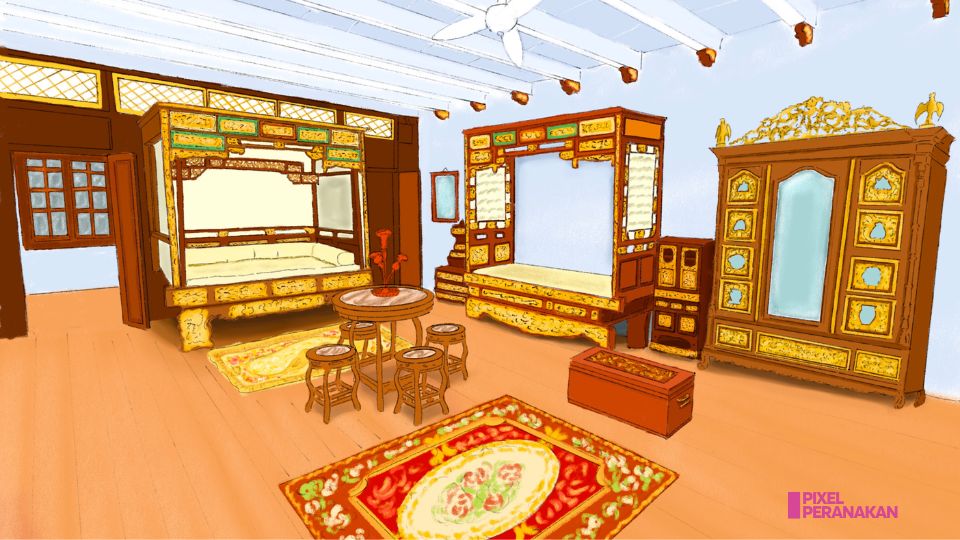
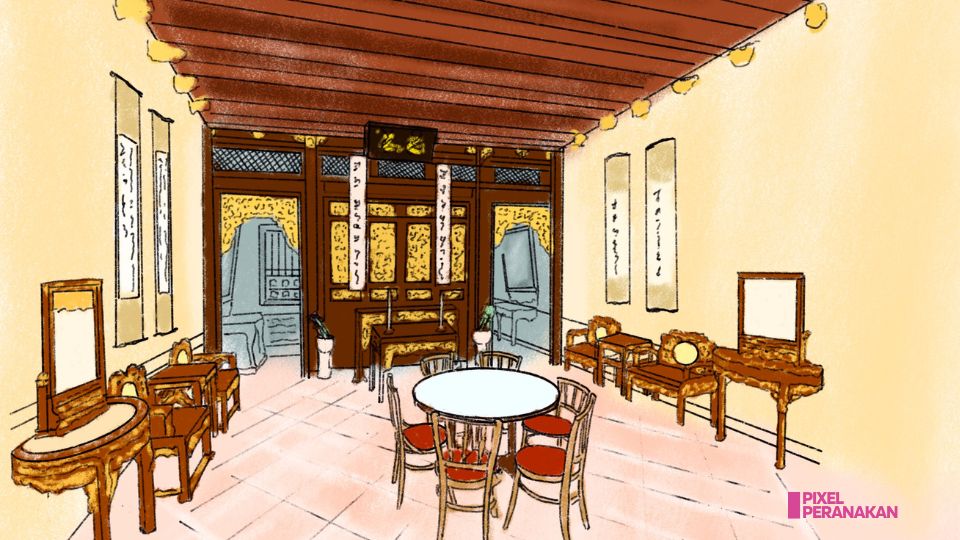 View closer
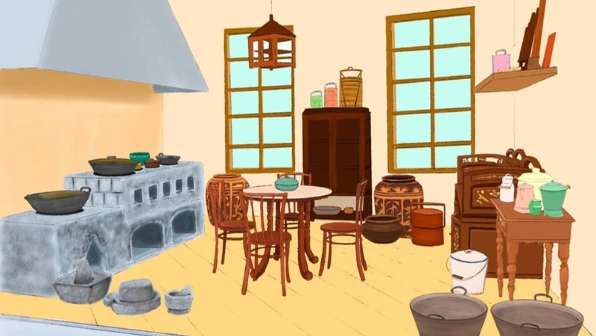 View closer
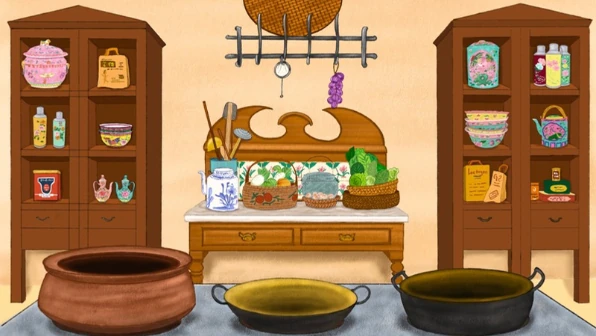 View closer
A place to begin
The project began with a personal question about growing up Peranakan, and what it means to have an identity that can feel mixed or difficult to categorise. Making a game gave us a way to explore that question through things people could do: choose, decorate, cook and discover.
Read the original launch note (opens in a new tab)My part in making it
I developed the game and its interface, bringing the narrative, artwork and sound into a playable experience. My work covered the engineering and code, scene progression, saving and loading, and getting the game running on the web.
There was plenty to work through between a scene looking right and feeling right to play. I worked on the minigame pacing, responsive layouts and the feedback around smaller actions, returning to the build as people tried it.
A closer look
 View closer
 View closer
Making the house respond
The July updates were full of small changes to how the game feels. Here are three of the interactions I worked on.
01Make the next touch easier
Small text and fiddly hotspots can get in the way, especially on a phone. I enlarged text across several scenes and increased the information hotspots. These changes came through the ongoing polish and playtest feedback.
Read the development update (opens in a new tab)02Give small actions a response
Tap the Kueh Pet and it wiggles. Rooms have their own ambience, and smaller actions have sound feedback. I also separated the music and sound-effect controls so players can adjust them independently.
Read the development update (opens in a new tab)03Keep people with the experience
I added a live loading percentage, compressed the game files and smoothed the room transitions. The mobile update also brought portrait support, with landscape recommended for playing.
Read the development update (opens in a new tab)TRY A SMALL DESIGN DECISION
A little more room to tap.
The July update enlarged information hotspots. Try two target sizes here, then tap the marker in the room.
A larger marker gives your next touch more room.
Portfolio illustration, not a reconstruction of the game’s original measurements. Both targets also work with Tab and Enter.
Release, listen, return to the build
- JULY 2026 · SOFT LAUNCH
Let people into the house.
The core journey became available to play. That gave us something concrete to share and return to as the artwork, writing and interactions developed.
Read the update (opens in a new tab) - 6 JULY · MOBILE & GAME FEEL
Work on the journey between scenes.
Portrait layouts, clearer loading feedback and smoother transitions were part of this pass. Playing on a phone became part of the development process.
Read the update (opens in a new tab) - 26 JULY · PLAYTEST RESPONSE
Pay attention to the smaller actions.
The next update brought larger touch targets, room ambience and a Kueh Pet that responds when tapped.
Read the update (opens in a new tab)
This is the part of interactive development I keep coming back to: how an experience responds, moment by moment. A room can look lovely, but the words still need to be readable and the next action needs to make sense. The released game gives me a way to keep working through those details.
Take it beyond the screen
The game is made for children aged 10–13 and curious adults. The companion guide offers parents another way into the stories and culture around the experience.
Made together
Julia helped shape the visual research, storytelling, cultural interpretation and direction of the project, alongside creating its illustrations. Her knowledge of and interest in Singaporean history was part of how we worked through the visual world together.
- Game development & UI
- Timothi Lim · Timothi Ellim
- Illustration, visual research & direction
- Julia Tay
- Acknowledgement
- National Heritage Board